what event led to great britain entering ww1
Dandy Uk was the reigning superpower in the world at the fourth dimension World War I began. In the years leading to the state of war, United kingdom of great britain and northern ireland had formed armed services alliances with France and Russian federation in the Triple Entente. These three countries were the leading Allied nations in WW1 against the Cardinal Powers of Germany, Austria-Hungary, the Ottoman Empire and Republic of bulgaria. After German invasion of Kingdom of belgium, Groovy United kingdom of great britain and northern ireland entered the war invoking the Treaty of London which required Britain to safeguard Kingdom of belgium'due south neutrality. The British Expeditionary Force (BEF), the British Regular army sent to the Western Front end, played a key role in the Allies halting the German language march towards Paris. Moreover, the British naval blockade of Germany played an important contributing function in final German capitulation in November 1918. Hither is a detailed analysis of Britain'south participation in World War I including all the major events in which information technology was involved.
The Reigning Superpower
With a big colonial empire, a formidable naval force that helped it dominate the sea trades, and the fruits of industrial revolution, Great Britain had been the dominant world power for a couple of centuries. The quick and efficient rising of Federal republic of germany in the decades leading to the War, was notwithstanding a articulate and perceived threat. The growing rivalry had witnessed a naval arms race and was among the reasons that Europe was looking for armed services alliances in a changing political climate.
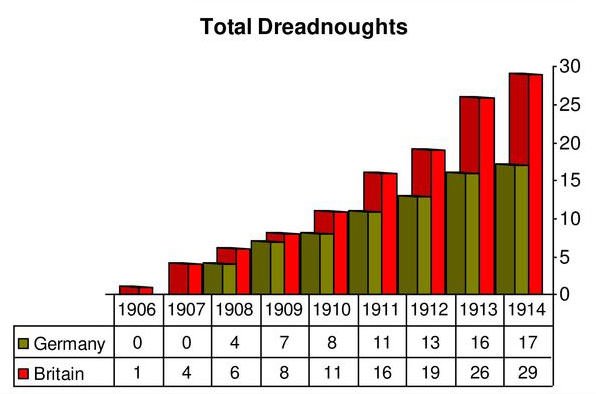
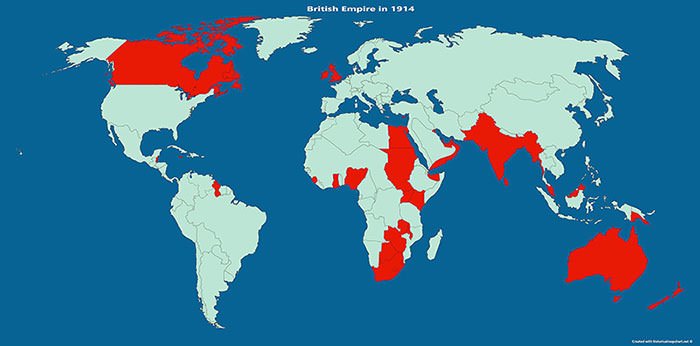
In 1914, Great britain was heavily industrialized with huge populations living in towns and cities. It was an economic superpower dominating merchandise and owning more than 40 per centum of mercantile ships. It was culturally, socially and religiously more than homogeneous than any other major ability, and thus better placed to withstand the strains of war. And nigh importantly it had access to the resources and manpower of its large Colonial Empire, which meant that chances of winning a long war with Great britain were bleak, though not impossible.
Entry Into WW1
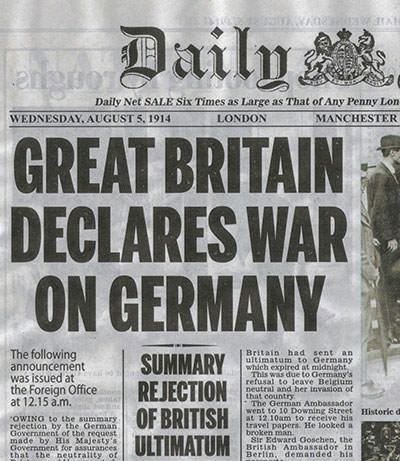
Equally Europe got engaged in the July Crunch after the assassination of Austro Hungarian heir Archduke Franz Ferdinand, Britain maintained a watchful heart. After state of war was alleged, Germany put into action its Schlieffen Program, which aimed at ending the French threat in a quick decisive conflict and then that German forces could exist transferred quickly to the Eastern Front to combat the much larger Russian army. With the aim of encircling French republic, Germany invaded neutral Belgium in early on Baronial 1914. The invasion invoked the decades former Treaty of London which required Britain among other Powers (including Prussia or Federal republic of germany) to safeguard Kingdom of belgium's neutrality. This 1839 treaty was the official reason that was cited by Great britain equally it declared state of war on Germany on August four, 1914. However there were other more important political, economical and military reasons that prompted British entry into war.
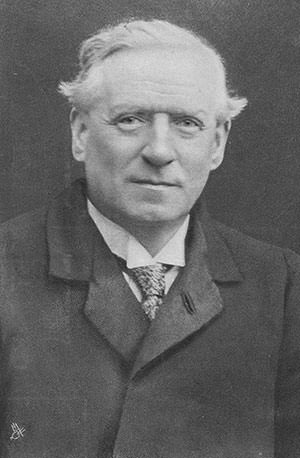
Britain was allied with France and Russia in the Triple Entente, but unlike the Franco-Russian alliance U.k. was not bound militarily and was free to follow its own foreign policy. Still German language control of ports on the English Channel via French republic, Belgium and the netherlands was confronting British interest. British Prime number Minister H. H. Asquith wrote on August 2, 1914: " It is confronting British interests that France should be wiped out equally a Bang-up Ability. We cannot allow Frg to apply the Channel as a hostile base of operations. Nosotros accept to prevent Kingdom of belgium being utilized and absorbed by Germany. " Moreover, the war threatened Asquith's coalition regime and his Liberal Party as top liberals threatened to resign if the cabinet refused to back up France.
British strange secretary and the principal force behind the country's strange policy Sir Edward Grey warned against abandoning British allies. He opined that if Germany won the state of war, or the Entente won without British support, then, either mode, United kingdom of great britain and northern ireland would exist left without any friends and would exist vulnerable to isolation.
Kitchener'south Volunteer Army And Conscription
A day subsequently Britain declared war on August four, 1914, Herbert Kitchener was appointed the British Secretary of Land for War. Against popular opinion that war would be over by Christmas, Kitchener predicted a long and brutal disharmonize and pressed for the expansion of the British Army by 500,000. The intention was to create a new army of volunteers, railroad train it and brand information technology ready to be put into activeness by mid-1916. Yet circumstances dictated its use before, and the first major action came in the Battle of Loos in September 1915.
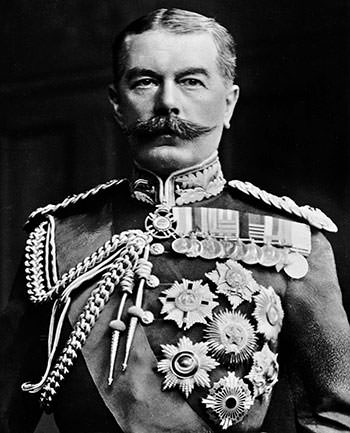
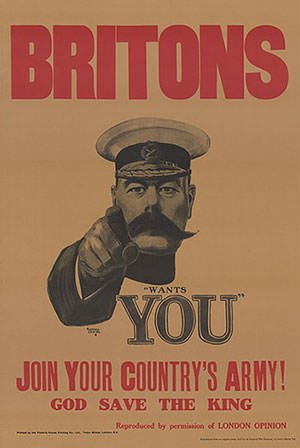
A big and successful affiche entrada was launched inviting men to join, and over twenty million recruitment pamphlets and leaflets were printed by April 1915. In that location was overwhelming response with 100,000 joining in the get-go 2 weeks. In places queues up to a mile long formed outside recruitment offices. The New Army, as information technology was officially called, was the biggest volunteer regular army the world had ever seen at the time, cartoon almost 2.5 million men from August 1914 until March 1916. This was only eclipsed past the Indian Army in the 2d World State of war.
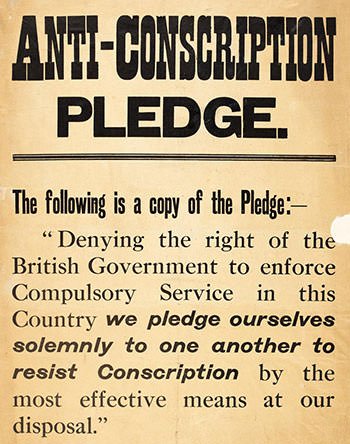
Past the commencement of 1916, enthusiasm for volunteering plunged in Uk, as data about the horrors of the state of war began affecting the population, especially after Somme that claimed 500,000 lives. The authorities was thus forced to introduce conscription by way of the Military Service Acts. The Human activity specified that men from xviii to 41 years erstwhile were liable to be called up for service in the army barring some exceptions. Information technology was introduced for the first time in Jan 1916 for single men, extended the liability to married men in May 1916 and farther extended the upper age limit to 51 in 1918. Political reasons prevented the human activity for beingness imposed on Ireland simply the terrible shortage of men in early 1918 led the British authorities to laissez passer the act in Ireland. This led to the Conscription Crisis of 1918, which saw vigorous opposition to the act led by trade unions, Irish gaelic nationalist parties and Roman Catholic bishops and priests.
Defence of the Realm Deed
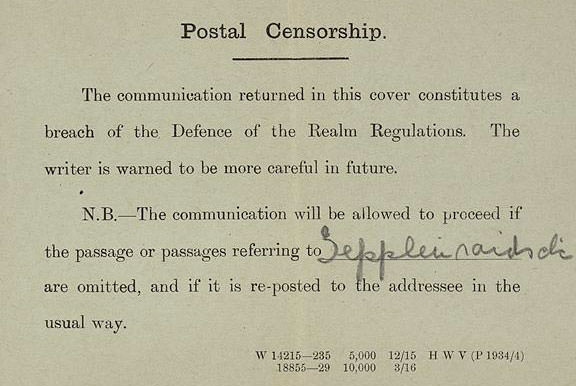
The Business firm of Commons passed the Defense of the Realm Act within the kickoff week of the British declaration of war. The act gave the government sweeping powers like requisition buildings or land needed for the state of war effort; or to make regulations creating criminal offenses. At that place were numerous social control measures adopted which included regulating alcohol consumption and food supplies. The legislation gave the government powers to suppress criticism, imprison without trial and to commandeer economic resources for the war effort. Any published information that was accounted to directly or indirectly benefit the enemy was punishable by police, as was any data likely to cause any conflict between the public and military forces. People who breached the regulations with intent to assist the enemy could be sentenced to decease. Many antiwar activists were sent to prison and a small number of people were also executed under these wartime regulations.
Strains of War
With millions of immature men joining the armed forces and the expansion of the war industry, U.k. began to face up labor shortages by early 1915. Government propaganda emphasized importance of women to the war effort, not just in a domestic role equally supporters of their menfolk at war, simply as positive contributors. An estimated 1 million moved from domestic service or other traditional women's employment to take a broad variety of jobs including working in labor intensive areas like the munitions factories.
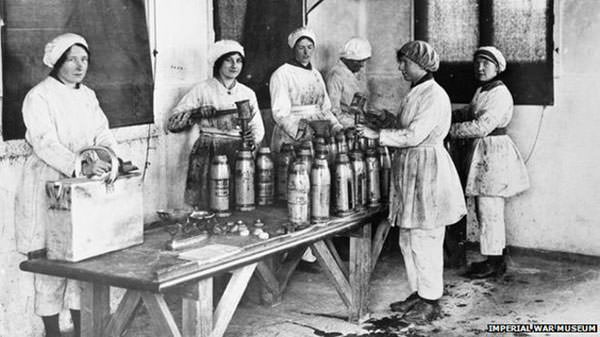
1915 was a tough year for the British; they did not win a single decisive battle on land or sea, and mostly suffered heavy defeats, like the one at the hands of the Ottomans at Gallipoli. The enthusiasm for volunteering was speedily subsiding and the pride of the nation Purple Navy was under pressure from High german unrestricted submarine warfare campaigns. The failure on the war front brought about political change with the formation of a coalition government with the Unionists led by Asquith; Winston Churchill was removed from the Admiralty; and Kitchener's authority was curtailed by the creation in May of a Ministry building of Munitions under David Lloyd George. Britain had the luxury of its immense colonial resources but it had the brunt of supporting its allies with money and equipment; and the financial burden was considered to exist too smashing by some. The challenge was to win the war without crippling Cracking Britain'south post-war prosperity and position in the world, which was slowly being threatened by an emerging The states of America.
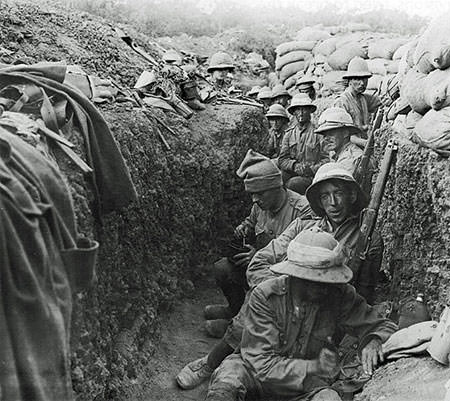
The B attle of Somme in 1916 saw 57,000 British casualties on its outset day, and took many more British lives as it progressed over several months. Asquith was forced to resign and was replaced every bit prime minister past Lloyd George, but a decisive victory notwithstanding eluded the British despite three major offensives in 1917. The twelvemonth marked the greatest strain and partitioning for the British abode front. Industrial strikes began and the government had to take stronger punitive actions against dissenters; and anti-authorities and antiwar propaganda. The ascension costs, lack of supplies and discontent among the public led to political and economic reforms, ranging from food rationing to an increased political franchise.
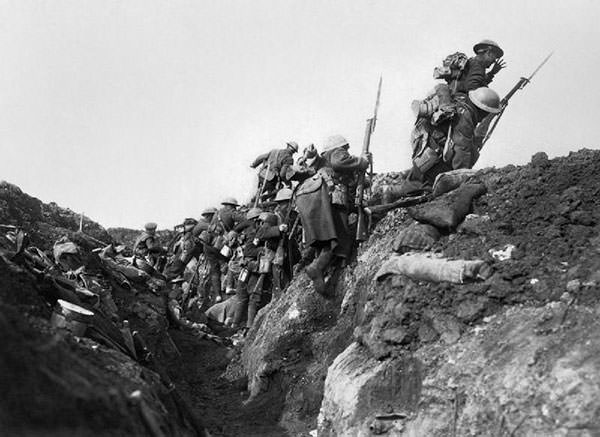
In April 1918 lack of fighting men led to the conscription beingness widened to all men aged eighteen to fifty-one. Legislation besides immune for extension of conscription to Ireland. This led to the Conscription Crisis of 1918 with vigorous opposition led by merchandise unions; Irish nationalist parties; and Roman Catholic bishops and priests. It galvanized support for political parties which advocated Irish separatism and influenced events in the lead-up to the Irish gaelic War of Independence.
British Expeditionary Force (BEF)
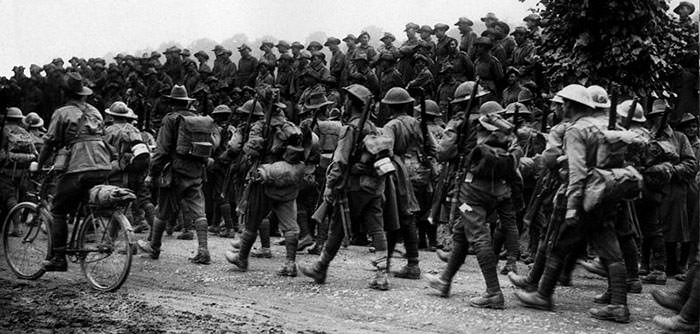
The British army before 1914 was comprised of just under 250,000 regulars, of whom most half were scattered across the Empire. Built with the purpose of defending the British Isles and policing the Empire, information technology was not an army intended to fight in a European state of war. The changing political state of affairs and Britain'southward treaty obligations to help France against a possible German attack even so led to reforms and the germination of the BEF. Later several armed forces discussions with France, it was agreed upon that U.k. would state a British Expeditionary Force of six infantry divisions in France in case of an attack. Information technology was a force of shut to 100,000 men.
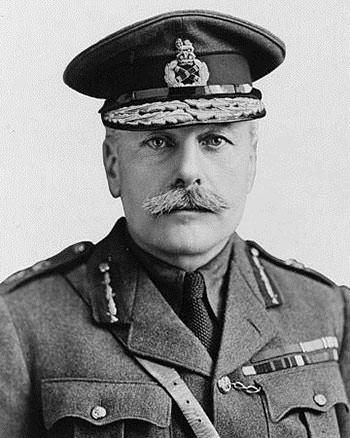
As Britain declared war, four infantry divisions and one cavalry division of the BEF was dispatched to France virtually immediately in Baronial. The original BEF was still effectively destroyed by the stop of 1914, suffering heavy prey and losing many of its most experienced officers and men. Reinforcements arrived in the get-go wintertime from Territorial Force units; and divisions from India and Canada. The BEF was kickoff reorganized on 26 December 1914 into two Armies, the Commencement and 2d. By mid-1915, information technology was Kitchener's " New Army " which, despite not being fully trained, was forced into providing the reinforcements. The Third Army was formed in July 1915 with the influx of troops from Kitchener'due south volunteers. Later farther reorganization, the Fourth Army and the Fifth Regular army were created in 1916. By at present considerable forces from Australia, South Africa, New Zealand and Newfoundland had joined the battle. B.East.F. remained the official name of the British armies in France and Flanders throughout the Beginning World War. At its acme, on 1 August 1917, the BEF in France and Belgium numbered 2,044,627 officers and soldiers.
The British Naval Blockade
While Great britain's primary allies France and Russia possessed big armies suited for conducting land warfare, the same was not true for United kingdom of great britain and northern ireland which had just limited trained land forces. U.k. was however a naval superpower and had considerable experience in carrying out naval warfare and executing naval strategies. The pre-war period of the early 20th century saw a naval arms race, every bit Germany began to grow its armada to challenge U.k.. Nearly historians concur that the planning for an economic blockade of Frg started in those times, and developed over the next decade to business relationship for irresolute dynamics similar development of German submarines and torpedo boats. The British had thus soon recognized that neutralizing the German language navy from the outset, and preventing them from forming their ain occludent of the Britain, was the key to ensur e their own survival and success in case of a conflict.
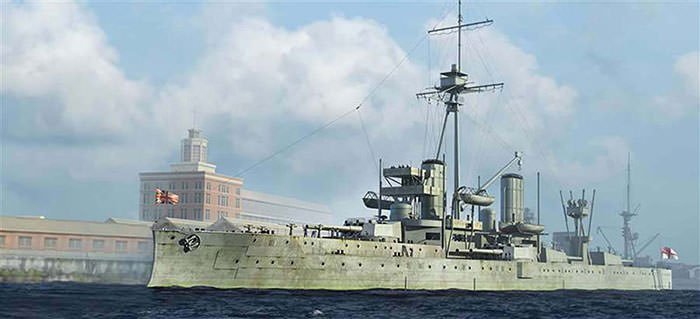
Britain established a naval blockade of Deutschland immediately on the outbreak of war in August 1914. The 2 entrances to the North Sea were blockaded along with the English Channel, and Due north Sea was declared as a war zone in Nov the aforementioned twelvemonth. A long listing of contraband items was issued that all but prohibited American trade with the Cardinal powers.
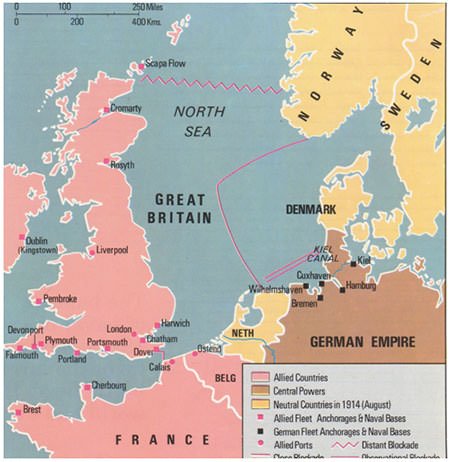
The blockade was amongst U.k.'southward greatest efforts during the state of war and was not just limited to the ocean. Though carried out efficiently by the Royal Navy, it was administered and guided by the British Strange Part. Political leaders made negotiations with neutral countries while spies and other ground assets were vital information sources that helped in sustaining the pressure on Germany as information technology tried to suspension free. Though the Offset World War was largely decided past forces in mainland Europe and Naval battles were simply a scattering, the impact of the British naval occludent of Federal republic of germany (1914-1918) played an of import contributing role in final German capitulation. It lasted well subsequently the state of war was over in November 1918 and ended merely after the Germans signed the Treaty of Versailles in June 1919.
Victory and Aftermath
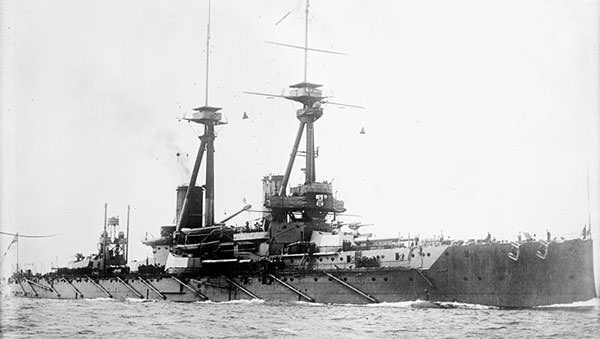
Things began to have shape for the Allies after the failure of the German Bound Offensive of 1918. The 100 days Allied O ffensive that followed, with the help of freshly arrived American troops, chop-chop changed the state of war as the strongest of the Central Powers, Germany, began retreating and facing defeat. The Cardinal powers soon began signing ceasefire treaties, which ended with Federal republic of germany on 11th November 1918, thus terminal the Offset Earth War.
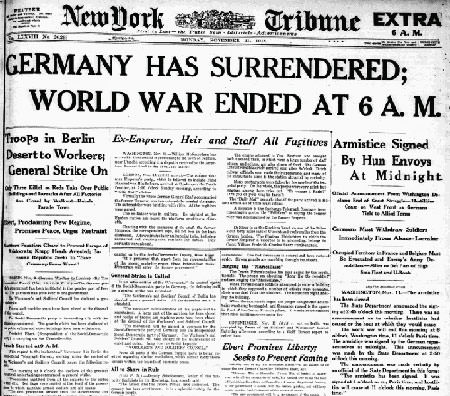
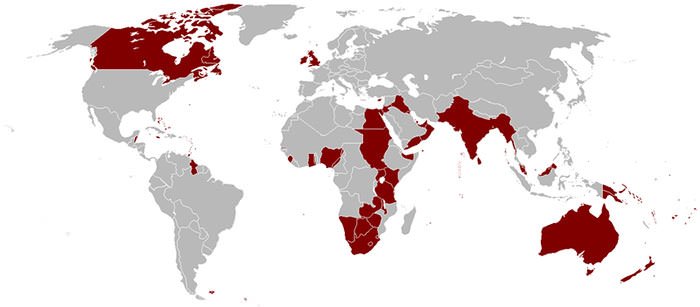
Britain had entered the State of war with the aim of restricting Frg and the 1919 Versailles Peace Treaty ensured British goals. Geographically, the British Empire was, after the war, at its largest extent ever, if the League of Nations " trusteeships " are included. London took accuse of an additional 1,800,000 square miles and xiii one thousand thousand new subjects; while Germany was left in shambles.
Withal, Britain incurred debts equivalent to 136% of its gross national product, and its major creditor, the USA, began to emerge as the world'south strongest economic system. Strange trade, a key part of the British economic system, had been desperately damaged by the war. Countries cut off from the supply of British appurtenances had been forced to build upwardly their ain industries. Hence, they were no longer reliant on Britain. Britain's enviable worldwide investments were wiped out ; and its coal and cotton export markets had collapsed. By the late 1920s the white 'dominions' adamant their own foreign policies and the I ndependence M ovement began gaining footing in India. The years between the wars were the declining years for what had been the prominent imperial ability of the world for close to 200 years.
Source: https://learnodo-newtonic.com/britain-ww1

Enregistrer un commentaire for "what event led to great britain entering ww1"